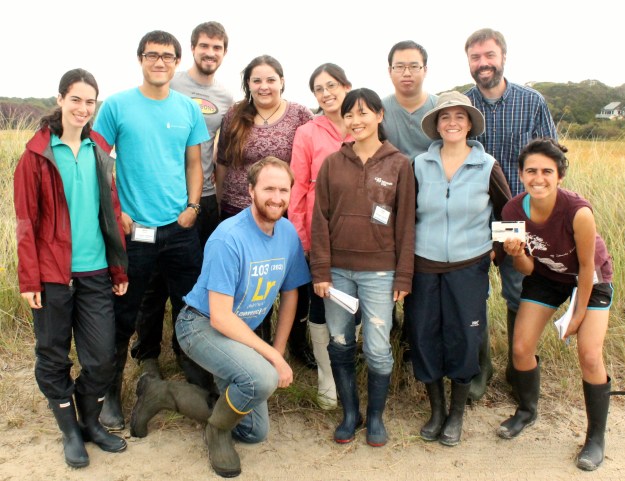
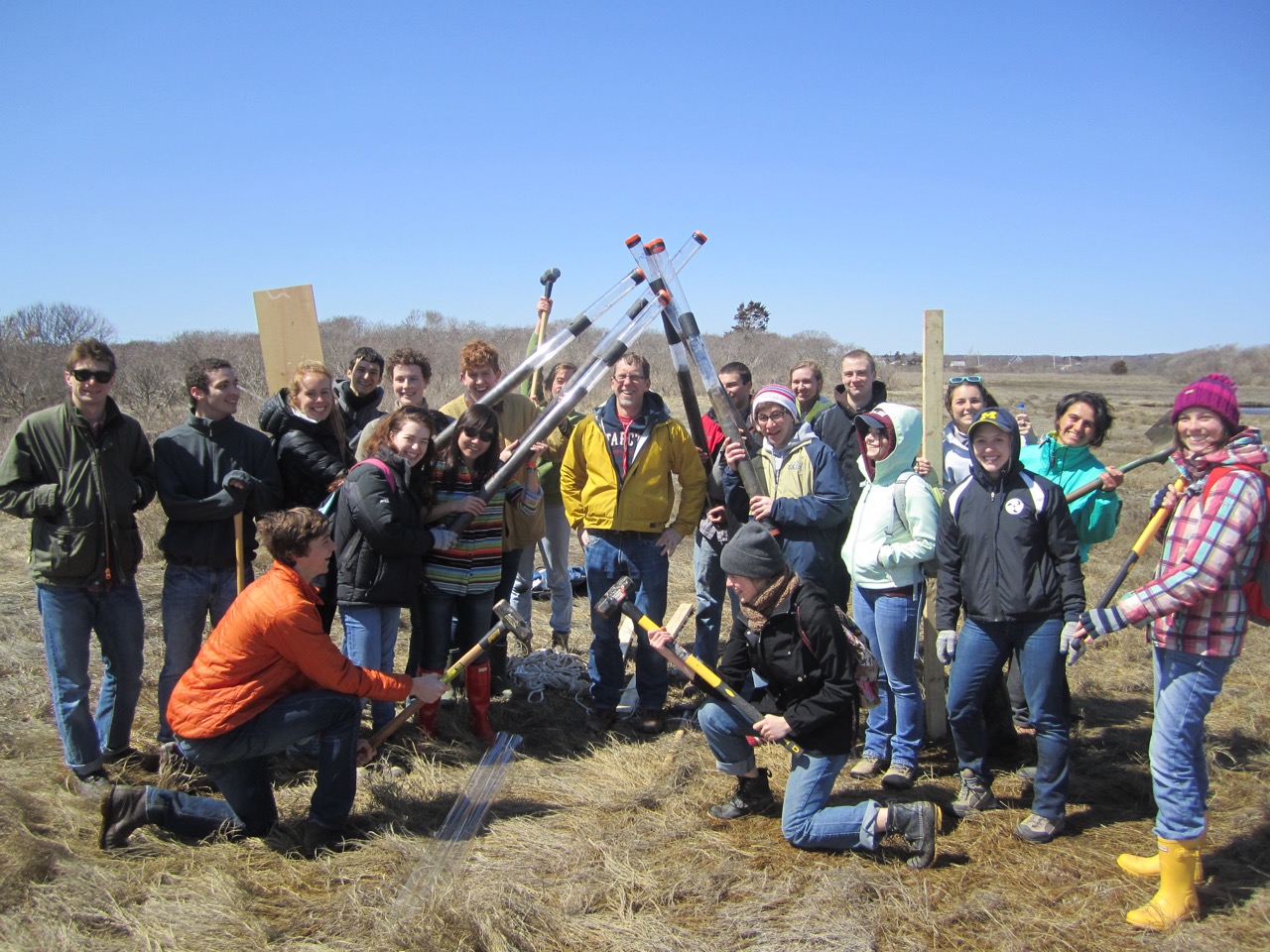
GeoMicroBio in the marsh (photo by E. Zettler)
This weekend I joined my fellow geomicrobiology classmates to explore the diversity and ecology of bacteria in the Little Sippewissett Salt Marsh (the little brother of the Great Sippewissett Salt Marsh) on Cape Cod. We hunted for Beggiatoa and purple sulfur bacteria, and, with molecular techniques, methanogens and sulfate reducers. Bacteria rule the world.
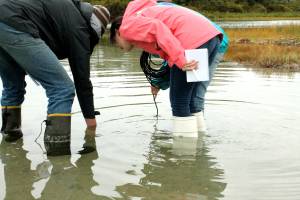
Ada and I taking physio-chemical measurements at high Tide. Thanks to rain the night before, we found a distinct freshwater cap overlying salt water in just 30 cm of water. (photo by G. Roberti)
(photo by J. Rich)
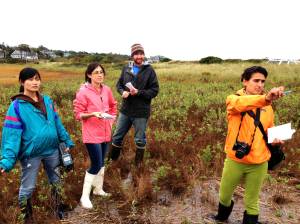
There might be some bacteria over there. (photo by J. Rich)
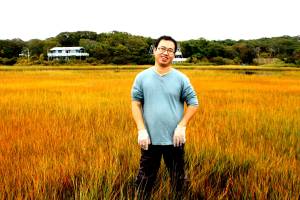
JJ soaking in the hydrogen sulfide. (photo by G. Roberti)
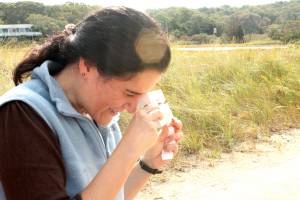
Field microscopes are so cool! These little microscopes use natural sunlight for on-the-spot IDs. (photo by G. Roberti)
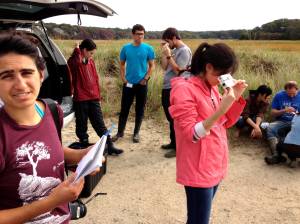
We saw cyanobacteria, rotifers, nematodes, and a ton of diatoms in the field scopes. (photo by J. Rich)
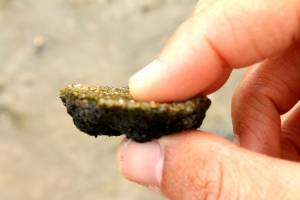
More mat. This probably contains a layer of cyanobacteria, sulfide oxidizers and sulfate reducers all within a few millimeters. (photo by G. Roberti)
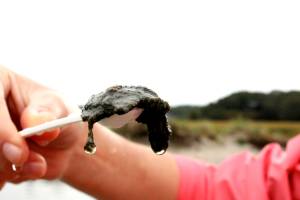
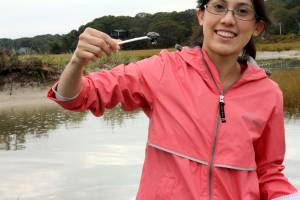
Ya, microbial mats make us happy. (photo by G. Robert)

Yinsui, Katie, and I with our samples for DNA extraction. (photo by G. Robert)

Professor Rich collecting a sediment core (photo by G. Robert)

Back at the MBL, we extracted DNA, amplified 4 genes of interest, and ran gel electrophoresis. Professor Amaral-Zettler overlooks the PCR preperation which requires great care not to contaminate the sample with foreign DNA. (photo by J. Rich)

 For Love of Limnology